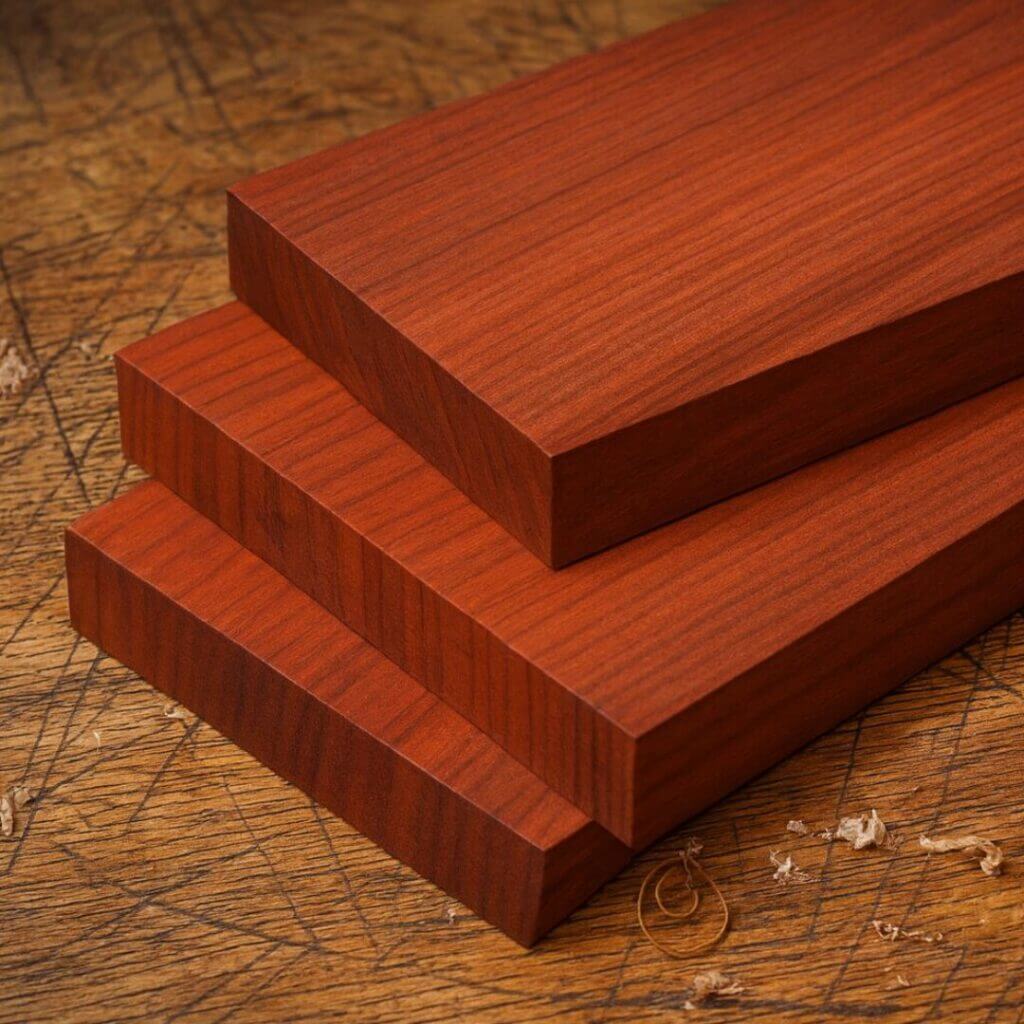
wood options
Where character, texture, and grain define the piece
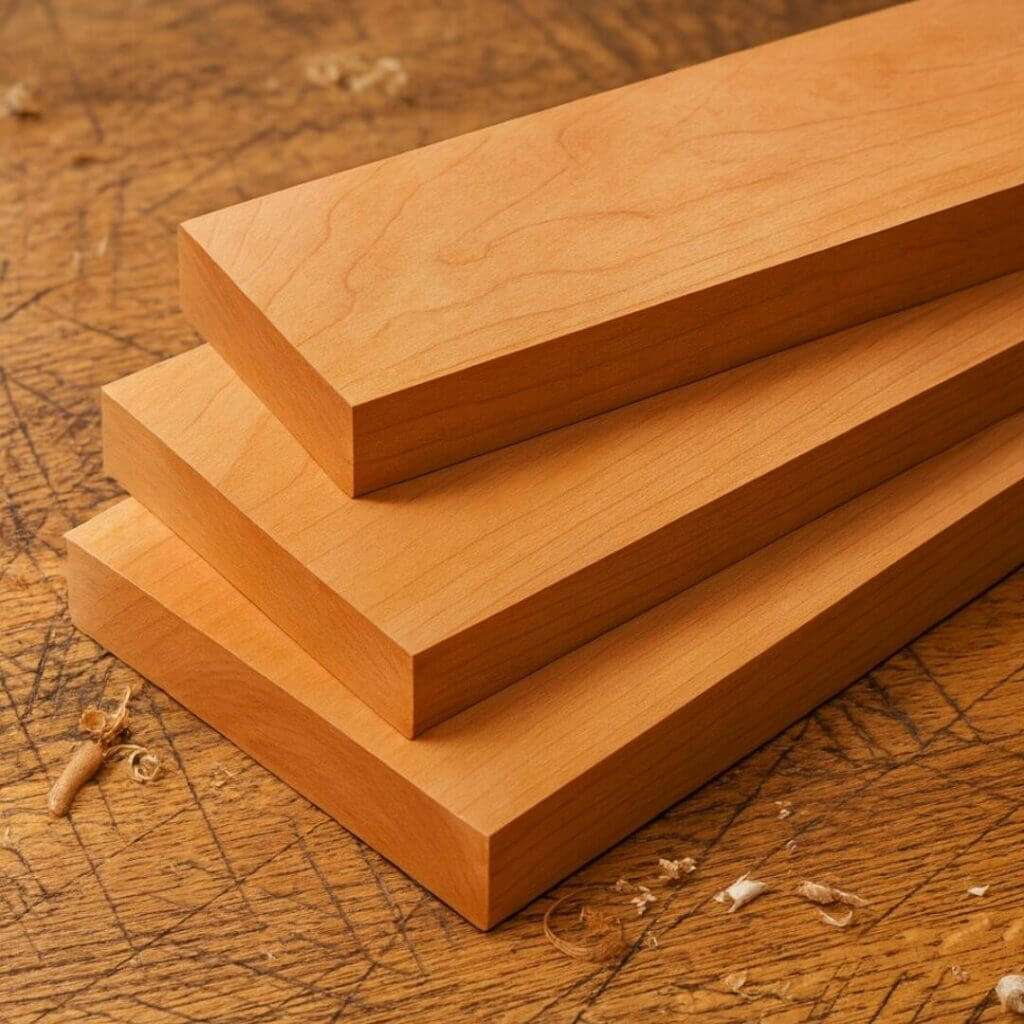
american black cherry
American Black Cherry, from Prunus serotina, is cherished for its warm reddish-brown hues, smooth texture, and superb workability. Its heartwood deepens into a rich, elegant patina, making it a favored choice for fine furniture, cabinetry, millwork, and crafted instruments.
The tree grows 15–30 meters tall with trunks 45–150 centimeters wide, featuring a straight form and bark that shifts from smooth and purplish in youth to dark, rugged, and deeply fissured with age.
Known for its stability, refined grain, and naturally luxurious appearance, American Black Cherry often displays subtle figure and beautiful color variation—giving each board a unique, sophisticated character.
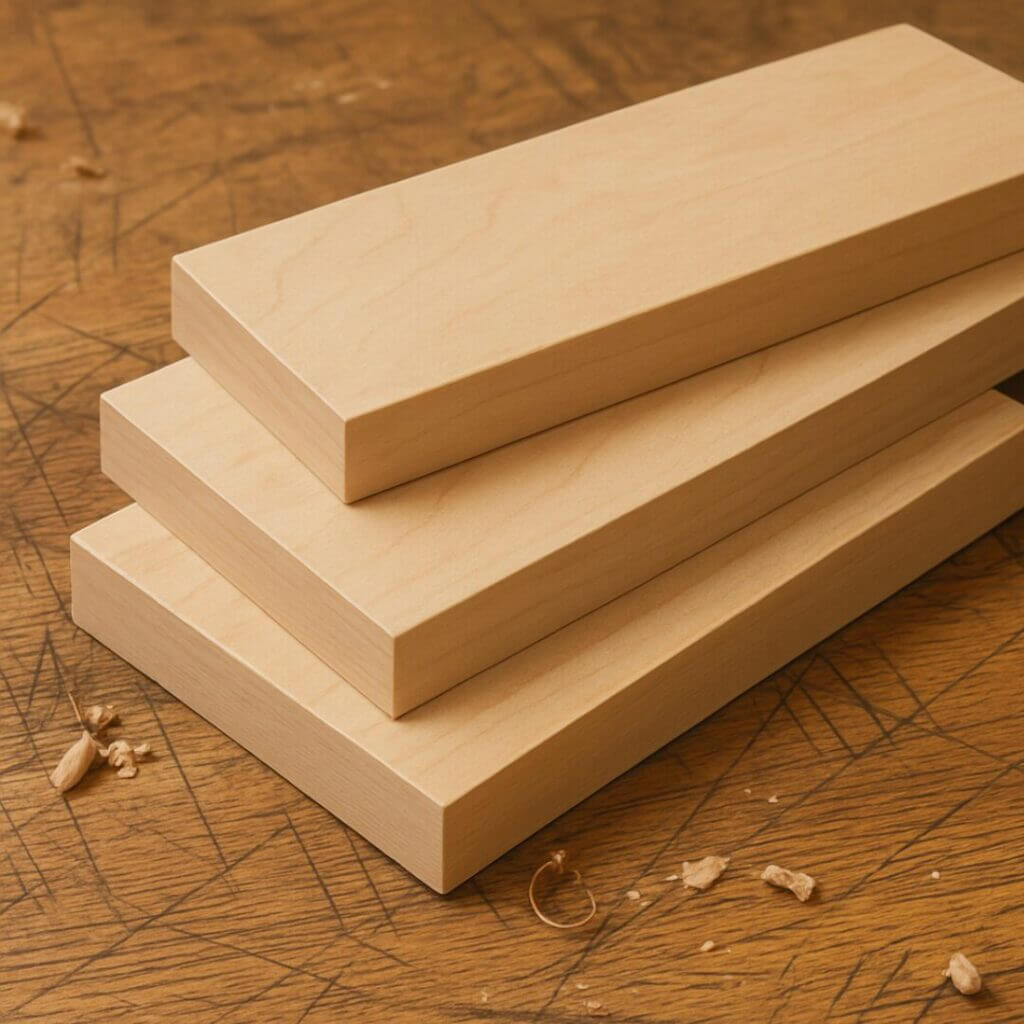
american hard maple
Primarily sourced from Acer saccharum, is valued for its strength, fine texture, and pale, luminous color ranging from creamy white to soft gold. Its durability and clean grain make it ideal for high-end furniture, flooring, millwork, cutting boards, and precision musical components.
Growing 25–35 meters tall with trunks 60–120 centimeters wide, the tree features a straight form and bark that shifts from smooth to rugged with age. Hard Maple’s consistent quality, excellent finishing properties, and occasional striking figure—such as birdseye or curl—give each board a bright, refined, and premium character.
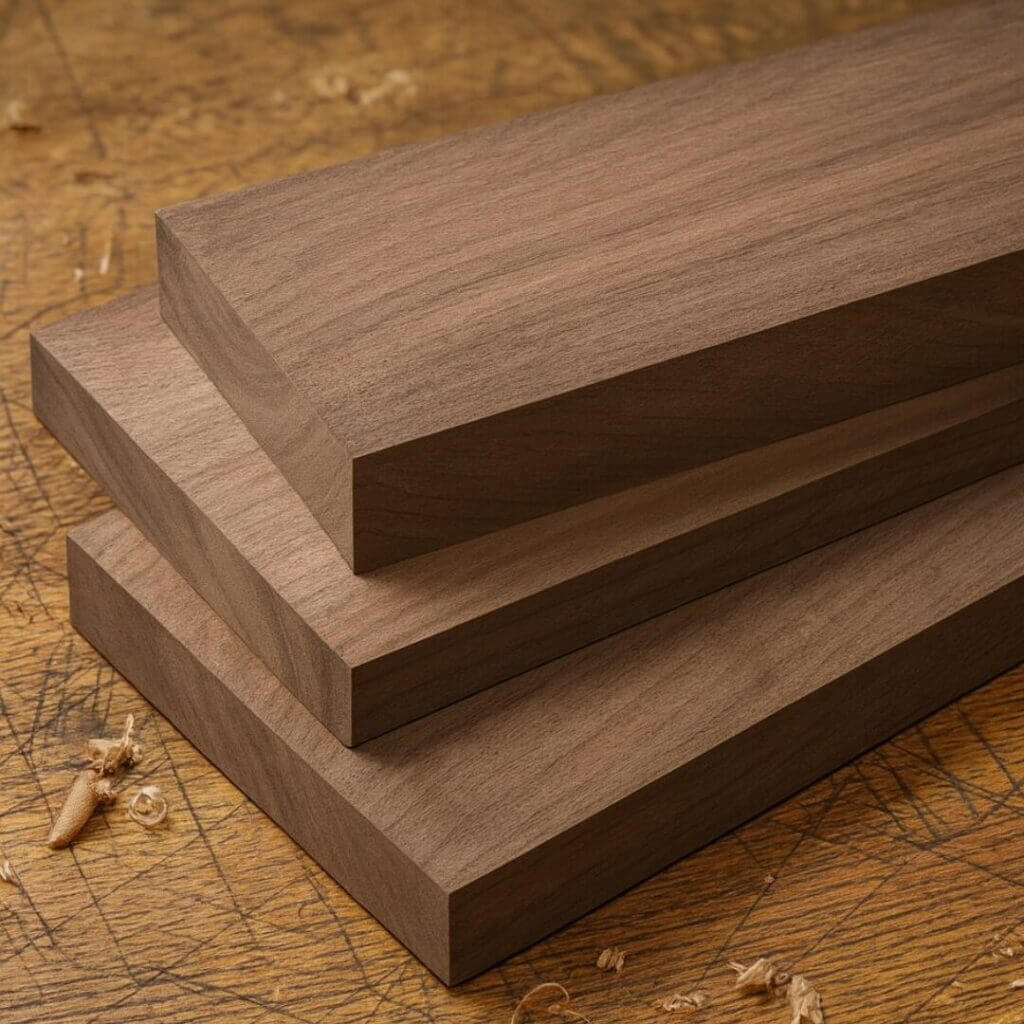
american walnut
Harvested primarily from Juglans nigra , highly prized North American hardwood, renowned for its rich chocolate to purplish-brown tones and superb workability. Its elegant color and flowing grain make it a preferred choice for fine furniture, cabinetry, gunstocks, and premium instruments.
Walnut trees grow 20–30 meters tall with trunks 60–120 centimeters wide, featuring a straight form and bark that deepens from light and ridged to dark and furrowed with age.
Valued for its stability and natural sophistication, American Walnut often shows beautiful figure—curls, crotch grain, and feather-like patterns—giving each board a luxurious, uniquely refined character.
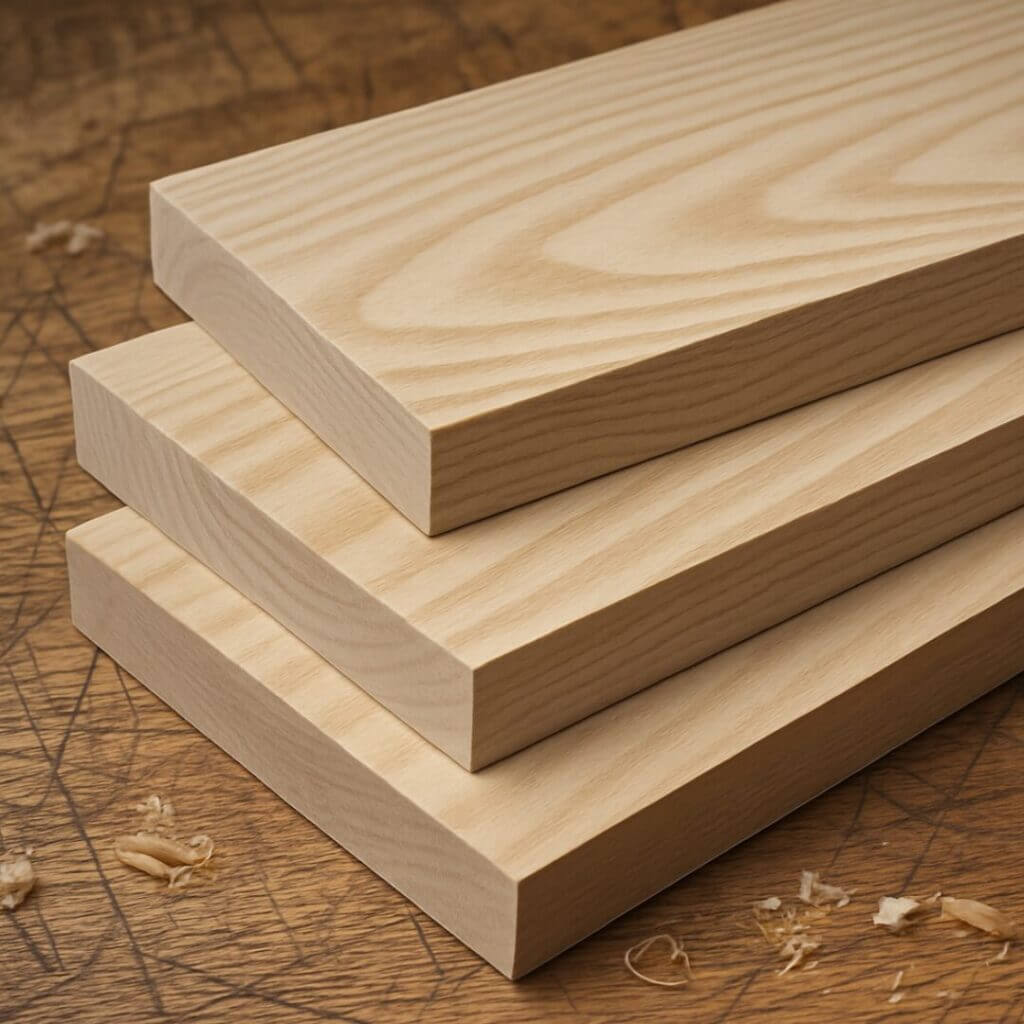
ash
Sourced from Fraxinus americana and related species, Ash is valued for its strength, resilience, and light, inviting color. Its pale cream to tan tones and bold grain give it a clean, contemporary look, making it ideal for fine furniture, cabinetry, millwork, and high-performance uses like tool handles and baseball bats.
Ash trees typically grow 18–30 meters tall with trunks 50–100 centimeters wide. Their bark shifts from smooth and light grey to darker and deeply ridged as they mature.
Known for its excellent workability and ability to take finishes beautifully, Ash can also display subtle curl or shimmering figure. Each board offers a crisp, versatile, and refined character suited for high-quality craftsmanship.
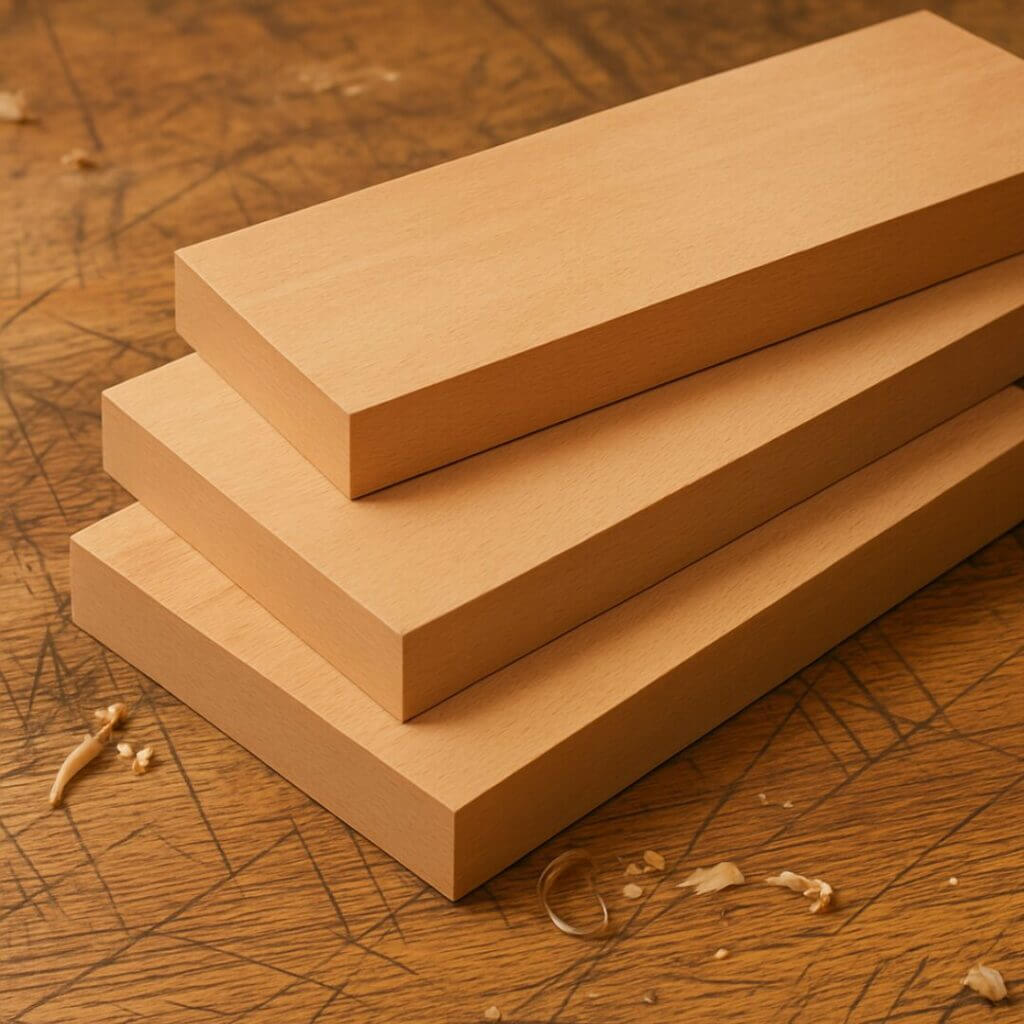
beech
Sourced from Fagus species across Europe, Asia, and North America, Beech is prized for its smooth texture, reliable strength, and refined, pale cream to pinkish-brown color that deepens gracefully with age. Its hardness, excellent bending qualities, and uniform grain make it a favorite for fine furniture, instruments, and clean, modern design.
Beech trees grow 25–40 meters tall with trunks 60–120 centimeters wide, featuring straight stems and broad, rounded crowns. Their silvery, smooth bark remains strikingly elegant through much of the tree’s life.
Known for its stability and exceptional finishing qualities, Beech also offers subtle figure that enhances its understated sophistication. Each board provides a warm, consistent, and versatile character ideal for premium cabinetry, flooring, and precision-crafted work
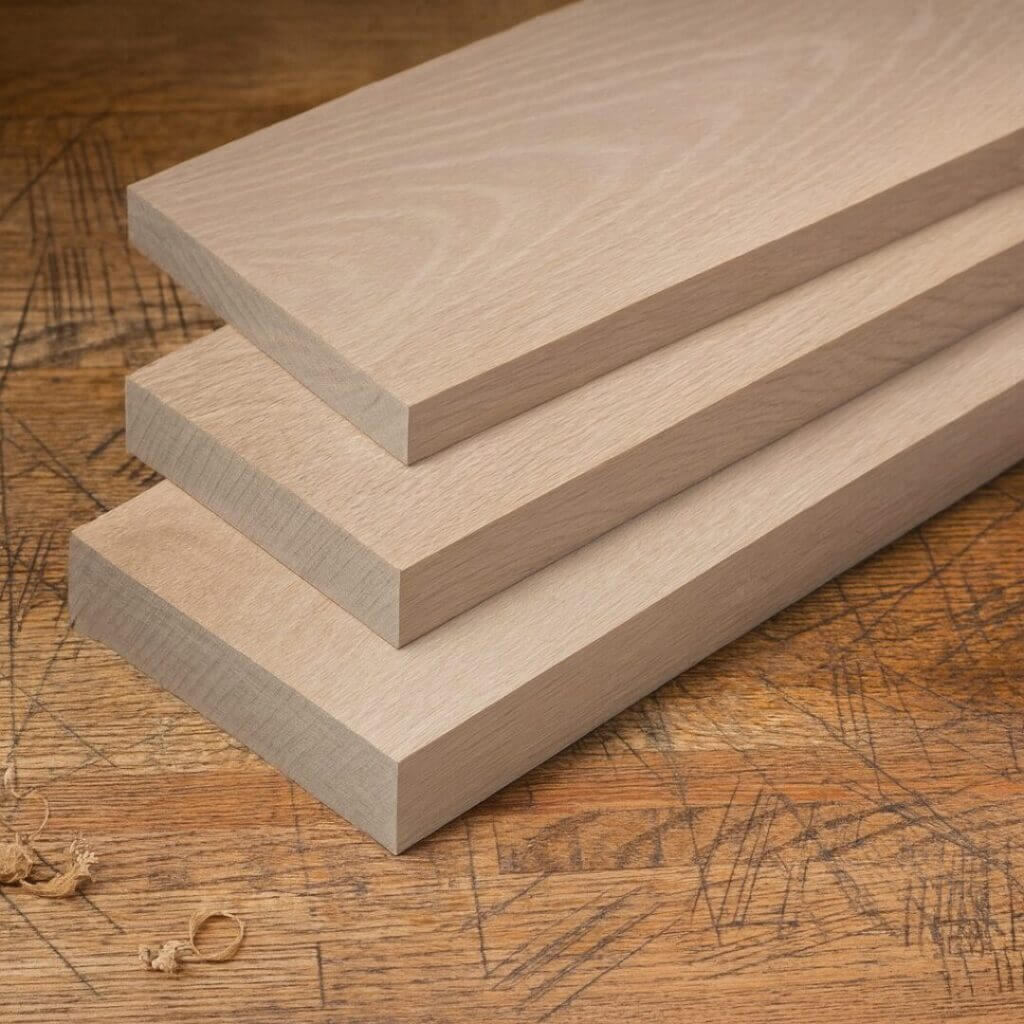
european oak
Primarily sourced from Quercus robur and Quercus petraea, is one of the world’s most iconic hardwoods—celebrated for its golden to honey-brown tones, expressive grain, and enduring strength. Its hardness, stability, and beautiful finish make it a top choice for luxury furniture, fine flooring, architectural joinery, and traditional wine and spirits barrels.
In nature, European Oak grows 20–40 meters tall with trunk diameters of 80–200 centimeters, forming a powerful, broad-crowned presence. Its bark develops into a rugged, deeply fissured surface that reflects the species’ longevity and resilience.
Known for its rich tannins and striking medullary rays, European Oak often reveals stunning figure—from silky ray fleck to cathedral grain—bringing a sense of heritage, luxury, and timeless sophistication to every project.